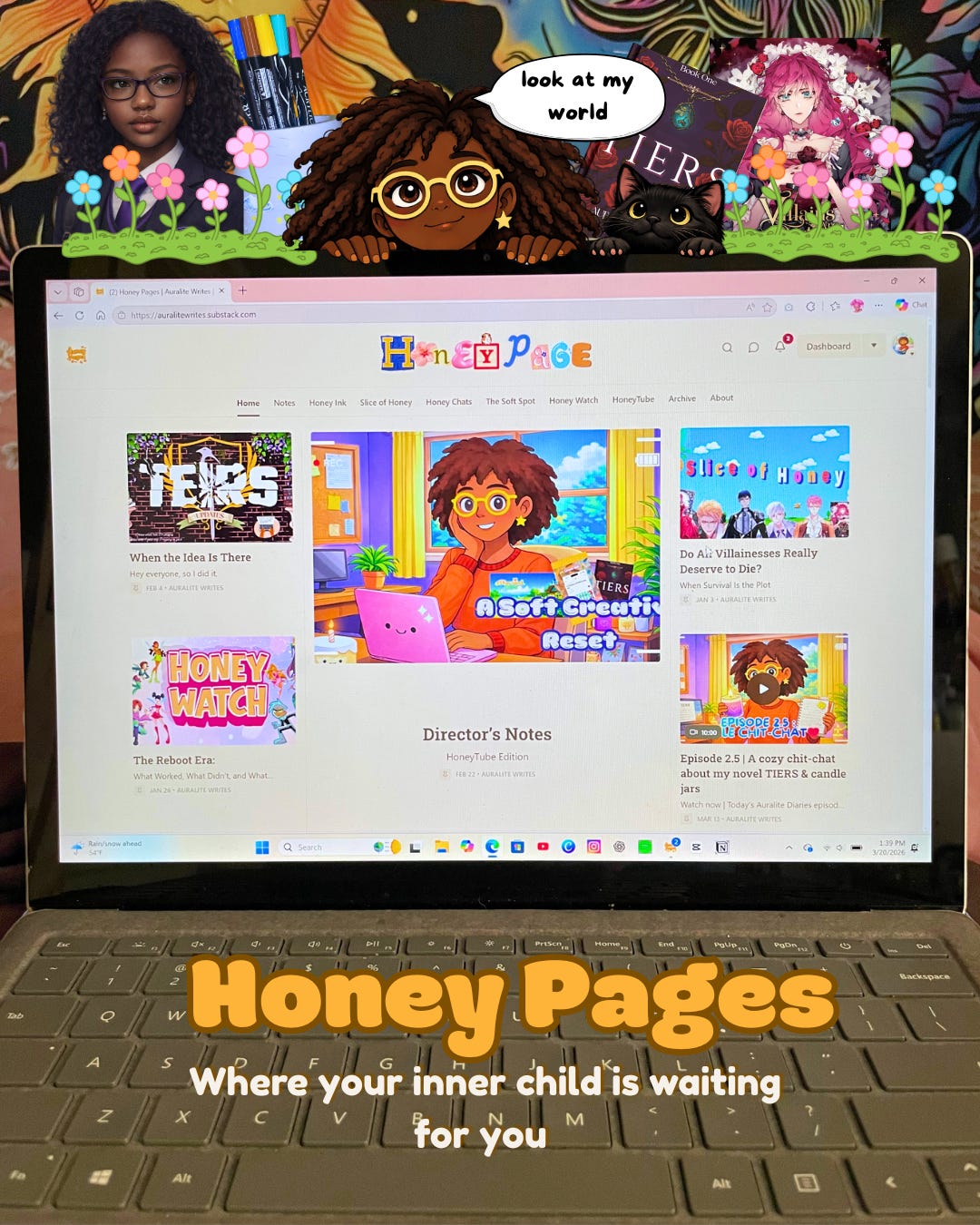

Hi everyone so it been a while since I wrote a blog for Honey Pages and also have not been that very active on Substack. For these past six month, I haven’t been working since last December and have apply to dozens of jobs ever since. May I say the job market is trash as hell, and I almost lost all hope, but a girl needs some money in bank to survive. Which I got me think why was I place in a magical era where unicorns, fairies and knight shiny armor to recuse me. But I live in reality where money is everything. With all the luck in the world I have finally, FINALLY found job that I not going to lie I don’t even feel quality for, yet.

While searching for jobs from Timbuktu to the Nile River and trying to manage the stress without pulling my hair out, I came across ABA. As someone with little to no understanding of what ABA entails, I decided to look it up on TikTok. Is it just me, or does it seem like TikTok is becoming the new Google? Anyway, during my brief research on ABA, or Applied Behavioral Analysis, I found it to be quite straightforward. Essentially, it’s a therapy designed for children on the autism spectrum, helping them learn adaptive skills for their daily lives. This is my interpretation, but it closely aligns with the definition you’d find on Google.
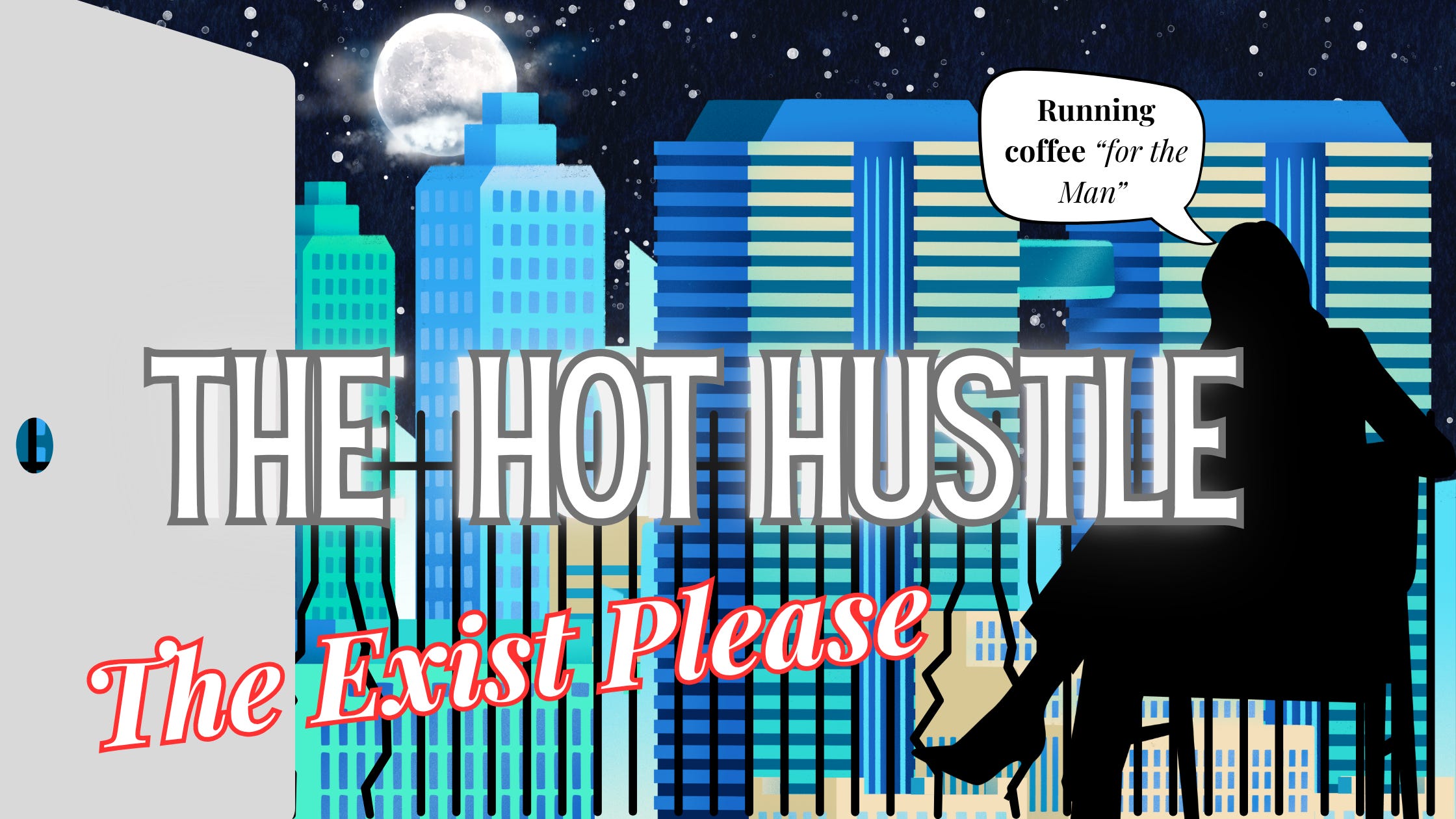
As much as I am excited about this new job, the entire experience has shifted my perspective on employment. Spending six months in job search mode will do that to anyone. Somewhere between scrolling through Indeed, LinkedIn, and other job platforms at 2 a.m., while trying to maintain my sanity amidst rejection emails, I began reflecting on how hustle culture is depicted in films. You know the archetype—the woman who moves to the bustling city, secures her dream job, manages to pay for an apartment, and still has energy left for happy hour with friends. The movies didn’t just romanticize hustle; they romanticized what struggle was allowed to look like
We are all familiar with hustle culture and the overwhelming feeling of needing to be better than others. But I can’t help but wonder when this hustle mentality began. When did it become the norm to work ourselves to exhaustion? The relentless competition to outdo one another is something I never desired, yet it felt necessary.
I recall watching movies like Legally Blonde, The Devil Wears Prada, and 13 Going on 30, longing for that seemingly perfect lifestyle where everything unfolds flawlessly. These films made life feel like a game where you level up by earning status points. They often started with a character stepping out of a car, spinning around amid the vibrant city, while the sounds of traffic and a local voice shouting “Watch it!” filled the air. But we overlook that because we’re so captivated by her glamorous life.

Back then, movie apartments somehow cost only $1,000 a month, and no one appeared stressed about grocery shopping.
Hearing the idea of grinding to your heart desires has been imbedded in our head before we even understand what hustle culture really was. Don’t get me wrong, the praise of corporate baddie is well deserving for all women but the feeling of some resenting just reaching to the top…. Just seeing their ambition living a life, with a career as an editor, fashion design and maybe a lawyer.
Reflecting on the lifestyle of the 2000s, movies depicting the journey to success felt inspiring. Admittedly, the early 2000s had its fair share of issues related to hustle culture, yet achieving success seemed less like a struggle. These portrayals of working hard and playing harder instilled a belief in fighting for what you earn, but at what cost?

As we’ve matured, the question remains: why are we pursuing a lifestyle that often leads to hardship? These films typically don’t showcase genuine struggle; instead, they depict women gracefully entering their careers, embodying power and poise as they juggle their busy lives, seemingly without a care in the world.
But what does struggle look like in movies that don’t begin with a woman who already has her life together? What happens when ambition isn’t celebrated the same way? And maybe is dealing with more than she can handle. When some of these movies, the depiction of having thing together and being a “bad bitch” does not always appear the same way.
Take Legally Blond. At first Elle Wood goals and accomplishment was center around her boyfriend going to Harvard and believe that she was not good enough to attend. Warner made her feel inferior because how she was presenting herself to world. But somewhere along the way, the story stops being about him. She discovers she actually belongs there. The movie starts with validation from a man but ends with validation from herself, which is why it still resonates with so many people.

Now compare that with Temptation. Here, ambition and desire aren’t treated as a path toward self-discovery. They’re treated as something far more dangerous. The promise of a different life more money, more luxury, more excitement, doesn’t lead to personal growth. Instead, it becomes a cautionary tale were wanting more comes with devastating consequences.
That’s what kept me thinking. Both women wanted a different future, yet the stories imagined very different outcomes. One turns ambition into a victory lap. The other turns it into a warning. That’s what stayed with me after six months of job searching. It wasn’t just that the stories were different it was that they taught me to expect different things from ambition. Some promised that hard work would reveal who you were. Others suggested that wanting more might cost you everything. Somewhere between those two ideas, I started wondering what success was actually supposed to look like in real life.
Maybe that’s why I found myself watching tarot readings on TikTok. Not because I expected someone to predict my future, but because after months of uncertainty, even small reminders to keep going start to sound comforting. I must admit, I sometimes get caught up in their words, believing that fortune or unexpected people might soon enter my life. Sure, those cards are meant to predict how the next 72 hours will unfold, but I can’t help but sit and listen to what some of these tarot readers have to say. As an Aquarius, I naturally focus on my own sign, but I also have a Scorpio moon and Capricorn rising because every sign matters, right?
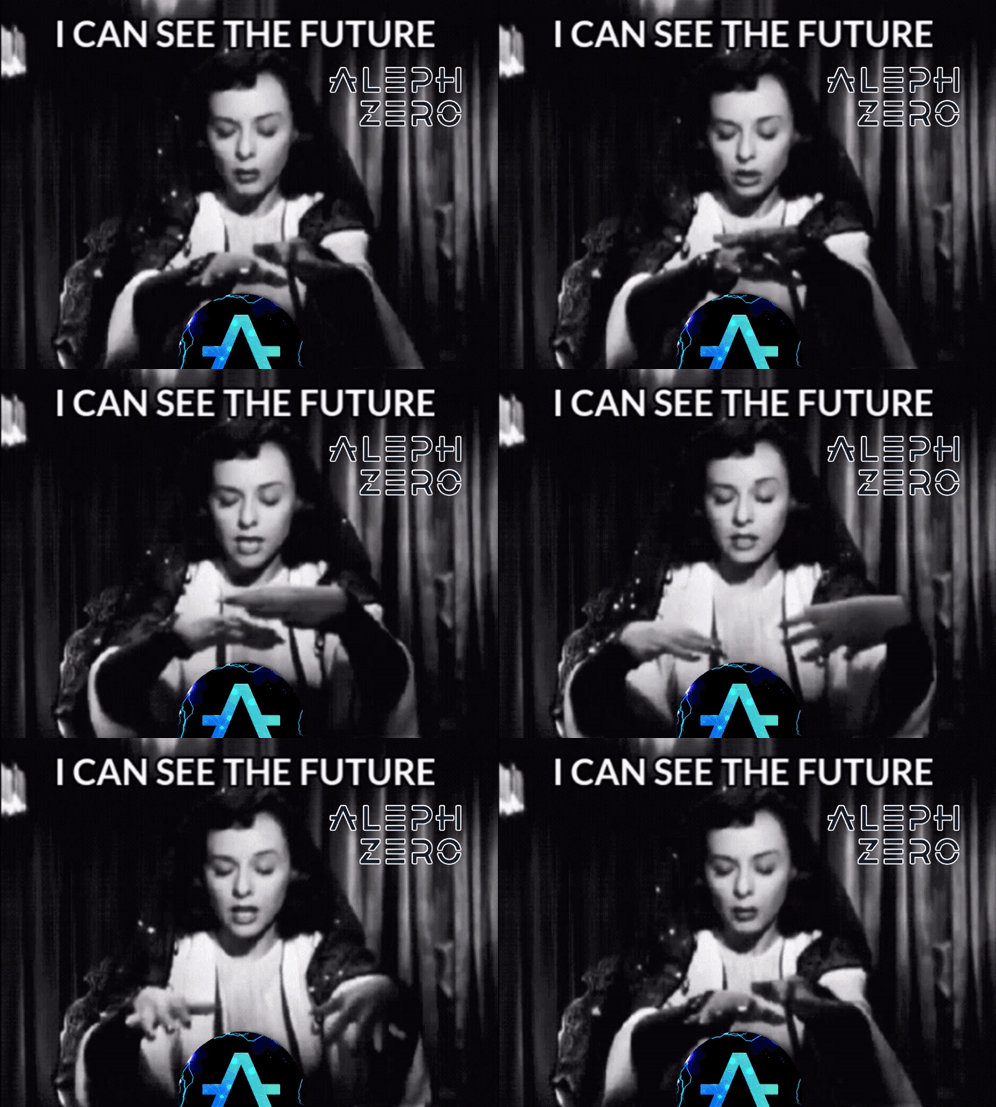
I delve into these signs, not just as messages from the universe, but as guidance suggesting that if you desire improvement, you must take action. One reading encouraged me to reconnect with my creative flow and to keep nurturing it, as something good will come from it. Another emphasized the idea of working smarter rather than harder, which is still a concept I’m striving to embrace. Although my current job is part-time, it pays significantly better than any previous position. I can see it being something that will grow with me and not something that I have to strive to build to make it better.
Looking back, I don’t think work and hustle are the same thing anymore. For a long time, I believed they were synonymous; I thought that if I put in enough effort, everything would eventually align. However, this new phase of my life has prompted me to rethink that notion. Work provides us with purpose, experience, and a means of supporting ourselves. In contrast, hustle often leads us to equate our self-worth with our productivity.
Perhaps growing up isn’t about abandoning ambition; rather, it’s about recognizing the distinction between cultivating a fulfilling life and relentlessly striving to prove your worthiness. To me, the essence of the “hot hustle” has transformed. It’s no longer about pursuing a superficial version of success. It’s about finding work that leaves enough room to build a life around it. Maybe the most effective hustle isn’t simply working harder, it’s understanding when hard work truly benefits you.